A trigger is something that reminds your body or mind of fear, pain, or danger. It might be a sound, smell, place, date, word, message, or tone of voice.
Triggers can feel frightening. But they do not mean you are going backwards. They can be a normal response after abuse.
What a Trigger Can Feel Like
When you are triggered, you may feel anxious, angry, frozen, tearful, sick, or numb.
You may feel like the past is happening again, even if you are safe now.
Your body may react before your mind has time to understand why.
This is not your fault.
Remind Yourself Where You Are
One simple grounding tool is to name the present moment.
You could say quietly:
I am here.
Today is Monday, Tuesday, etc.
I am in my lounge, the car, at the shops etc.
The danger is not here right now.
This feeling will pass.
If speaking feels hard, you can write it down or write it on your phone and read it from there. You could also record it as a voice memo and WhatsApp it to yourself, so you can hear it anytime you need to. This would be very reassuring.
Use the 5-4-3-2-1 Tool
This can help bring your mind back to now.
Notice:
5 things you can see
4 things you can feel
3 things you can hear
2 things you can smell
1 thing you can taste
Go slowly. There is no need to get it perfect.
Help Your Body Feel Safe
You could try:
Putting both feet on the floor
Holding a warm drink
Wrapping yourself in a blanket
Pressing your hands together
Taking slow breaths
Looking around the room
Stepping outside if it is safe
These small actions can tell your body that you are in the present.
Make a Trigger Plan
When you feel calm, you could make a short plan for hard moments.
Write down:
What helps me feel safe?
Who can I contact?
What should I avoid if I feel overwhelmed?
What words help me?
Where can I go if I need space?
Keep it simple.

Be Gentle With Yourself Afterwards
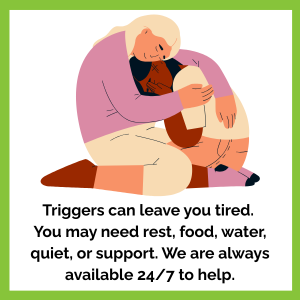
Triggers can leave you tired. You may need rest, food, water, quiet, or support.
Try not to shame yourself. Your body is trying to protect you, even if the reaction feels too strong.
Final Thoughts
A trigger is a response to what you have been through, not a sign that you are failing. You can learn ways to steady yourself, one moment at a time.
Need Support? We Can Help.
Our helpline is run by a kind and patient all-women team. You can talk to us in confidence, and we will help you think about what feels safest for you. We are here to listen, support, and advise if you want us to.
Calls to our helpline are free from landlines and mobile phones within the UK and do not appear on itemised bills. There is no pressure and everything is confidential.

Helpline: 0808 800 0340
Sometimes our helpline is busy and you might not get through the first time, so please try again. We will always call you back if you leave a message stating it is safe to do so and if you leave us a safe contact number in your message.
If you are hearing impaired, text “Relay/NGT” to 18001 0808 800 0340. This option is available 24-hours a day, 365 days a year.
You can also email us on [email protected] 9 am – 9 pm.
Please note, we may not be able to respond to emails straight away, but will try to reply within 24 hours.
National Help
If you’re further afield, you could contact other charities like Women’s Aid, who have instant messaging and email contact on their website: https://www.womensaid.org.uk/
The National Domestic Abuse Helpline (0808 2000 247) also provide confidential support. They can help you make a safety plan, find safe housing, and access legal protections.
The deaf health charity Signhealth also runs a domestic abuse support service, DeafHope, using British Sign Language (BSL).
The Survivor’s Trust (for sexual abuse and assault support) – www.thesurvivorstrust.org