
Mornings can be hard when you are healing from abuse. You may wake up feeling tired, anxious, low, or unsure how to face the day.
A gentle morning routine will not fix everything. But it can help you feel a little more steady.
You Do Not Need a Perfect Routine
You do not need to wake up at 5 am. You do not need to do lots of things. You do not need to be cheerful.
A healing routine should feel kind, not strict.
The aim is not to be perfect. The aim is to help your body and mind feel a little safer.
Start With One Small Thing
Choose one small action that feels possible.
This could be:
Opening the curtains
Drinking a glass of water
Washing your face
Putting on clean clothes
Taking medication
Making a cup of tea
Sitting quietly for two minutes
Small steps count. They are not silly. They can help your day begin with care. This can make a big difference, so give yourself the chance.
Use Your Senses
After abuse, your body may feel tense or on alert. Using your senses can help you come back to the present moment.
You could notice:
The warmth of your cup
The sound of birds or traffic
The feel of your feet on the floor
The smell of soap
The colour of the sky
This can remind your body: I am here now. This is today. I am okay in this moment.
Be Kind With Your Words
The way you speak to yourself matters.
You could try saying:
I am doing my best and that is great.
I do not have to solve everything today.
I deserve peace.
One small step is enough.
I am allowed to rest.
You may not believe these words at first. That is okay. Keep them gentle and simple.

Plan One Safe Thing
It may help to think of one safe thing for the day.
This could be texting a trusted friend, going to an appointment, eating lunch, moving your body, resting, or calling for support.
Try not to plan too much. Healing often needs space.
If the Morning Goes Wrong
Some mornings will still feel difficult. That does not mean you have failed.
You can begin again at any time of day. Let go of the hours that have passed. Instead, say to yourself, ‘What can I do now that will help me feel more calm or positive for the rest of the day?’
A gentle routine is not a test. It is a way of caring for yourself.
Final Thoughts
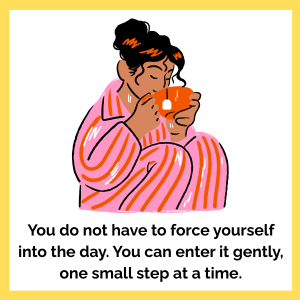
You do not have to force yourself into the day. You can enter it gently, one small step at a time.
Need Support? We Can Help.
You are not alone. Our helpline is run by a warm and friendly all-women team. We are here to listen, not judge. There is no pressure to leave your situation or to make a decision. We offer support and advice and work with you at your own pace. We are here and ready to help. Call or email us as soon as you wish to. We are on your side.
Calls to our helpline are free from landlines and mobile phones within the UK and do not appear on itemised bills. There is no pressure and everything is confidential.

Helpline: 0808 800 0340
Sometimes our helpline is busy and you might not get through the first time, so please try again. We will always call you back if you leave a message stating it is safe to do so and if you leave us a safe contact number in your message.
If you are hearing impaired, text “Relay/NGT” to 18001 0808 800 0340. This option is available 24-hours a day, 365 days a year.
You can also email us on [email protected] 9 am – 9 pm.
Please note, we may not be able to respond to emails straight away, but will try to reply within 24 hours.
National Help
If you’re further afield, you could contact other charities like Women’s Aid, who have instant messaging and email contact on their website: https://www.womensaid.org.uk/
The National Domestic Abuse Helpline (0808 2000 247) also provide confidential support. They can help you make a safety plan, find safe housing, and access legal protections.
The deaf health charity Signhealth also runs a domestic abuse support service, DeafHope, using British Sign Language (BSL).
The Survivor’s Trust (for sexual abuse and assault support) – www.thesurvivorstrust.org